


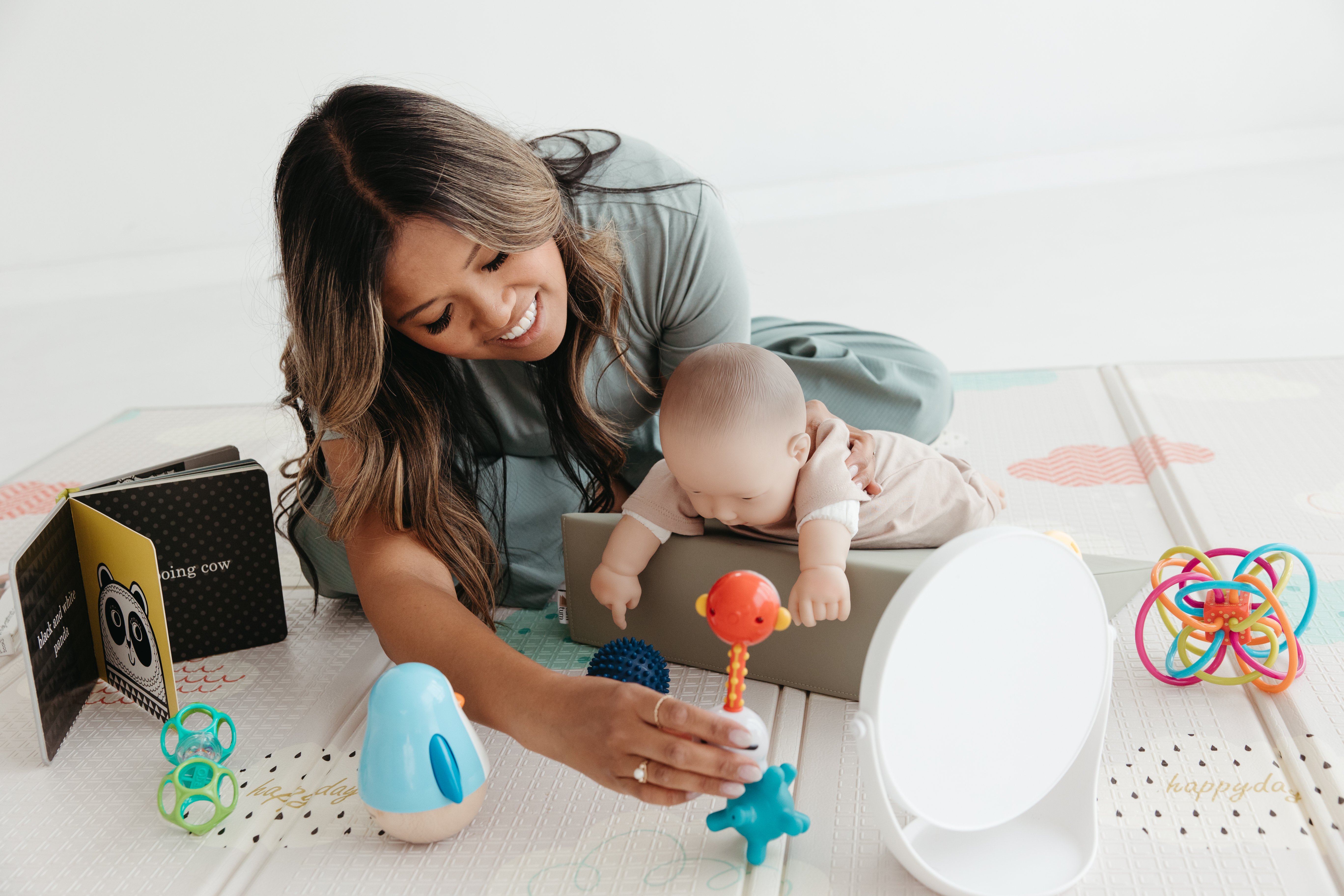

- Armi Grace Peterson, founder of Motivated OT Mama, talks us through the basics of pediatric occupational therapy and more.
New parents face a barrage of questions and concerns about their babies. There's a constant questioning about whether our little ones are doing well, and whether we're doing right by them.
Thankfully, we have people like Armi Grace Peterson, founder of Motivated OT Mama and certified pediatric occupational therapist here to help answer questions
1. In a nutshell to folks who aren't familiar, how do you describe/define pediatric occupational therapy?
I always start with the word occupation. In occupational therapy, an occupation is anything that occupies your time and gives meaning to your day. For a baby, their occupations are things like eating, sleeping, playing, moving, and connecting with their caregivers. As kids get older, that expands to getting dressed, feeding themselves, going to school, playing with friends, participating in activities, and becoming more independent. Occupational therapists look at what someone needs or wants to do in their everyday life, what might be making it difficult, and how we can support them. And that same lens can apply to parents. Motherhood completely changes your occupations, your routines, sleep, self-care, relationships, household responsibilities, work, and even your sense of identity. That's one reason I love working with the whole parent-baby dyad rather than looking at either one in isolation.
2. Is there ever a "that's too early" line in the sand for considering occupational therapy for newborns? How can parents assess that this could be a helpful option to explore?
I don't think there needs to be a minimum age for asking questions or getting support. Our traditional medical model tends to be reactive: we identify a problem and then treat it. In my practice, I want to help families be more proactive. That means not only knowing the developmental "red flags," but also understanding the yellow and green flags, what's going well, what's worth watching, and what parents can do at home to support development.
With newborns, concerns often involve feeding, regulation, positioning, movement, sleep and simply figuring out how to interact and play with this brand-new person. There's absolutely a normal adjustment period after bringing a baby home, but I also pay attention to how the entire family is functioning. If feeding your baby is taking over your entire day, you're struggling to get through basic routines, your baby seems uncomfortable or difficult to settle, or your gut is telling you something isn't quite right, it's okay to ask for support.
Parents also shouldn't have to wait until there's a delay to learn about development. There isn't exactly a "Baby Play 101" class that everyone gets after delivery! Many parents don't really learn what developmental milestones to watch for until they're handed a screening questionnaire at a pediatrician appointment.
That's part of why I incorporate education and free developmental screenings into my community mom-and-baby groups. Sometimes a family needs therapy. Sometimes they just need reassurance, education and a few ideas for tummy time, positioning or play. Both are valuable.
3. What are the two biggest misconceptions about or under-the-radar facts you'd like folks to know about infant and baby developmental milestones?
The first is that "wait and see" isn't always the best approach.
Development naturally happens across a range, so being a little later with a milestone doesn't automatically mean something is wrong. But when there is a genuine concern, earlier identification gives us more opportunity to support the baby before compensatory movement patterns become established.
Torticollis is a great example. Research has shown that when treatment for congenital muscular torticollis begins before one month of age, approximately 98% of infants achieve near-normal neck range of motion within about a month and a half. When intervention doesn't begin until after six months, treatment may take nine to ten months, with fewer babies achieving near-normal range. Early doesn't necessarily mean more therapy, it can actually mean a shorter course of intervention. The second misconception is that achieving a milestone tells us the whole story. I'm also interested in how a baby gets there. Babies are incredibly smart problem-solvers. They will usually find the easiest way to accomplish what they want to do! Sometimes, though, that means compensating for a skill that isn't quite there yet. A baby may roll, sit or move successfully while consistently favoring one side, for example. That's why I encourage parents to notice things like symmetry, movement variety and preferences, not just whether their baby checked a milestone off a list. Milestones are a reference point, not a report card.
4. You're a big advocate for postpartum moms receiving occupational therapy as well. Could you talk about what that means, why it's so important, and the benefits of this kind of support?
I often describe motherhood itself as a developmental milestone.
We spend so much time talking about the baby's development after birth, but a mother is developing too. Her body, identity, relationships, routines, responsibilities, sleep, sensory needs and roles have all changed, sometimes overnight.
Those are all things occupational therapists are trained to look at.
Postpartum OT might include figuring out realistic routines, adapting daily activities during recovery, managing sensory overload or feeling "touched out," finding ways to protect sleep and self-care, navigating the division of household responsibilities, returning to work, feeding or pumping routines, and helping a mom reconnect with the things that make her feel like herself.
And supporting the parent isn't separate from supporting the baby. The American Academy of Pediatrics recognizes that perinatal mental health can affect parent-infant interaction, attachment and a child's social-emotional and cognitive development. Supporting healthy, responsive parent-child relationships is an important part of supporting early development.
That's why one of the philosophies behind my practice is: I hold the mom so she can hold her baby.
Sometimes the best thing we can do for a baby's development isn't adding another activity to Mom's to-do list. It's making sure Mom has the support, capacity and confidence to participate in everyday life with her baby.
5. What's one piece of advice you give or want all parents to receive in moments of uncertainty, no matter where they are in the journey (expectant, new, repeat parents)?
One of my favorite reminders for parents is: "The only parent you have to be better than is the parent you were yesterday."
There's so much pressure to find the "right" way to parent. The right feeding method. The right sleep schedule. The right toys. The right routine. And now parents have access to thousands of opinions before they've even finished a 2 a.m. feeding. But there often isn't one universally right answer.
I encourage families to take the information they're given and ask: Is everyone safe? Is my mental health being protected? Is this sustainable for our family? Can my partner and I get on the same page? Are we protecting sleep and functioning as best we can?
What worked for your friend, your sister, someone on Instagram, or even what worked with your first baby, may not be what works for this baby and this season of your life.You don't have to parent perfectly. You get to learn your baby, learn yourself in this new season, and make informed choices that work for your family.
About Armi
Armi Grace Peterse n, MS, OTR/L, ASDCS, CWHS, CBS, is a pediatric occupational therapist, mom of three, and founder of Motivated OT Mama. After experiencing postpartum anxiety, postpartum depression, loneliness, and isolation in her own transition to motherhood, Armi Grace combined her personal experiences with her professional passion for supporting children and families to create the kind of support she wished she had.
Through Motivated OT Mama, Armi Grace supports moms and babies throughout the Chicagoland area with in-home 1:1 occupational therapy and community-based groups focused on postpartum support, infant development, feeding, play, and parent education. Her approach looks at the whole parent-baby relationship, with the belief that supporting a baby's development also means supporting the person caring for them.
Her goal is simple: to help parents feel more confident, supported, and less alone as they navigate pregnancy, postpartum, feeding, and their baby's development.